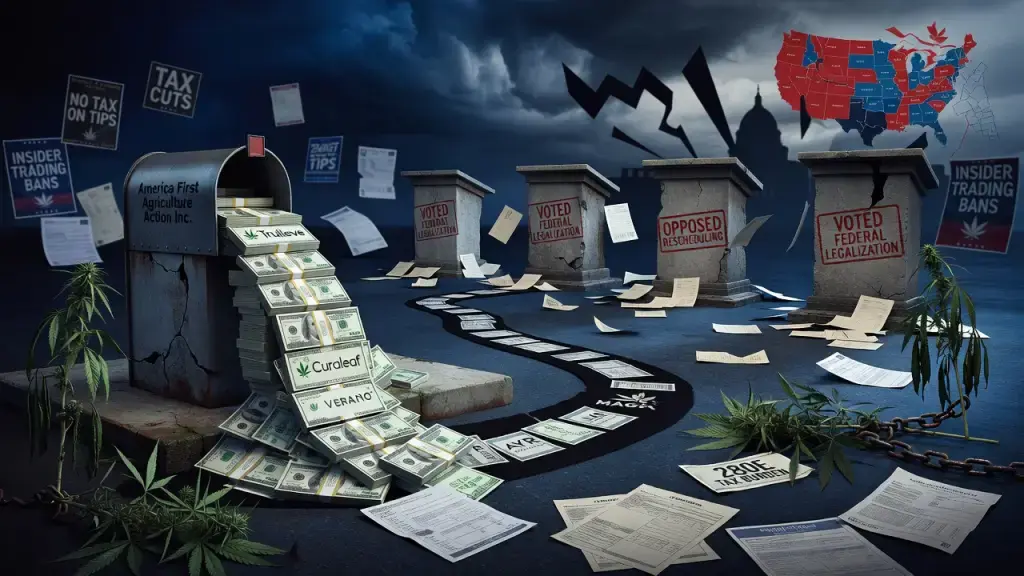
Multi-state operators spent heavily to protect Republican allies in Congress this cycle. Most of that money did not work. Nearly every GOP lawmaker whose reelection campaign received backing funded by marijuana industry donations routed through a Trump-linked political action committee lost their race last week, raising hard questions for an industry that has bet big on access over outcomes.
Where the Money Came From, and Where It Went
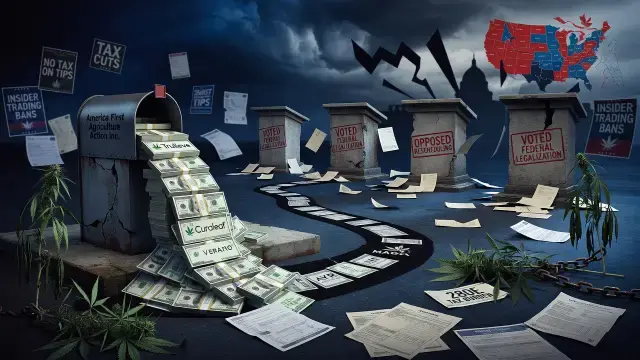
The mechanics here matter for anyone tracking how cannabis political spending actually moves. Trulieve, Curaleaf, Verano, Ascend Wellness, Green Thumb Industries and AYR Wellness collectively funneled $11.5 million into America First Agriculture Action Inc. in June. That single infusion pushed total cannabis-linked contributions to Trump-world political committees past $15 million. The PAC then deployed more than $4 million of that money defending House Republicans in competitive districts-several of whom have a documented record of voting against federal legalization efforts.
Here's the catch: the ads never mentioned cannabis. Direct mail and spots touted votes on insider trading bans, tax cuts, and no-tax-on-tips policy. In practice, though, the money trail back to marijuana companies was traceable through FEC filings, even if voters in these districts never saw it on a mailer.
A Spending Strategy That Didn't Translate to Wins
Most of the embattled incumbents the PAC supported went down. One race remains uncalled. That is a rough return on a multimillion-dollar investment, and it raises an operational question multi-state operators need to sit with: is PAC spending through adjacent agriculture and advocacy vehicles actually buying influence, or just burning capital that could otherwise offset the industry's brutal 280E tax exposure?
The lawmakers backed weren't neutral on cannabis policy, either. Fitzpatrick, Perry and Steil all voted against Democratic-led federalization bills in 2020 and 2022-the only two times legalization has reached a House floor vote, both under Democratic control. Lawler has called marijuana a "gateway drug" and opposed rescheduling outright. Ciscomani celebrated the defeat of Arizona's 2016 adult-use ballot measure. MacKenzie voted against medical cannabis legalization in Pennsylvania's statehouse. This wasn't industry money chasing friendly votes. It was industry money chasing access, regardless of voting record.
What This Means for Operators Watching Rescheduling
For dispensary owners and compliance teams tracking the DOJ's rescheduling process, the political spending saga is a reminder that the industry's biggest companies are playing a long game with uncertain payoff. The same treasurer, Charles Gantt, sits atop both America First Agriculture Action and Trump's MAGA Inc. committee-a structural overlap that shows how tightly cannabis-industry PAC money has been woven into Trump-aligned political infrastructure, including $2.05 million funneled to MAGA Inc. through a separate cannabis-backed committee.
None of this changes what operators face day to day: seed-to-sale tracking obligations, state excise tax bills, lab testing and COA requirements, and the federal tax penalty under 280E that political largesse was presumably meant to help dislodge. If anything, a midterm where most subsidized candidates lost suggests the industry's lobbying strategy needs recalibration, not repetition. Appropriations riders blocking rescheduling funding passed the House this year anyway, a sign that money spent defending incumbents did little to shift the party's institutional posture on reform.
The Bigger Picture for Industry Political Strategy
What's striking here is the disconnect between spending and strategy. Backing candidates with anti-cannabis voting records, hoping proximity to Trump's rescheduling push would pay dividends, looks like a bet that didn't account for broader midterm headwinds facing the GOP conference. For an industry still fighting for banking access, interstate commerce clarity, and relief from federal tax code 280E, the lesson is straightforward: dollars spent protecting incumbents hostile to legalization don't advance policy goals just because those incumbents sit in the majority party. Operators and trade groups weighing future political contributions may want a sharper filter-one that prioritizes voting record over proximity to power.