
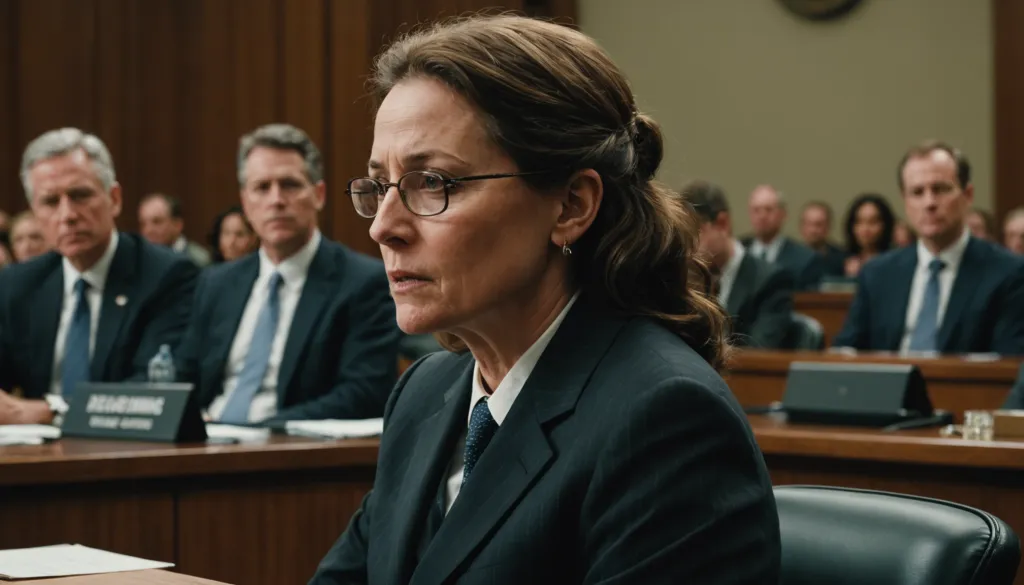
A federal witness at the Drug Enforcement Administration's cannabis rescheduling hearing acknowledged under cross-examination that marijuana would not have satisfied the longstanding five-part test historically used to determine whether a substance has accepted medical value - a concession that reform opponents are treating as a significant blow to the rescheduling case. The admission came on the second day of proceedings at DEA headquarters, where attorneys representing Idaho, Indiana, Nebraska, and prohibitionist organizations pressed Dominic Chiapperino, director of the controlled substance staff at the FDA's Center for Drug Evaluation and Research, on why the government switched analytical frameworks midway through its own review. The hearing, which is not being livestreamed despite requests from press and lawmakers, is shaping up as a methodological fight as much as a scientific one.
The regulatory stakes here extend well beyond the hearing room. Licensed cannabis operators - from multi-state dispensary groups filing compliance reports across a dozen jurisdictions to single-location retailers relying on dispensary software in Montana to manage inventory and track sales - have been watching the rescheduling proceedings closely, because a move from Schedule I to Schedule III would trigger a cascade of operational and financial consequences, most notably relief from the federal tax burden imposed by Internal Revenue Code Section 280E. That provision, which prevents cannabis businesses from deducting ordinary business expenses because they traffick in a Schedule I controlled substance, compresses margins in ways that no other consumer retail sector endures. The government's ability to defend the rescheduling recommendation may now rest, in part, on whether a court ultimately accepts its switch to a new analytical standard.
The Test That Changed - and the Timing That Raised Questions
For decades, the federal framework for evaluating a substance's currently accepted medical use, or CAMU, relied on a five-part test. The criteria covered whether a drug's chemistry is known and reproducible, whether safety studies exist, whether adequate and well-controlled studies prove efficacy, whether qualified experts accept the drug, and whether scientific evidence is widely available. Cannabis had been evaluated under that test as recently as 2015 - and it failed.
In 2023, officials shifted to a two-part analysis that asks whether there is widespread, current experience with medical use by licensed health care providers operating under state law, and whether credible scientific support exists for at least one medical condition. Chiapperino testified that this new framework did not exist when FDA analysts began their most recent marijuana review. He acknowledged that in July 2023 - just two months before the agency completed its analysis - a letter from the assistant secretary of health informed them of the new approach. The DEA lawyers objected to the line of questioning that surfaced this timeline; the presiding judge overruled them.
The Department of Justice's Office of Legal Counsel addressed the switch in a 2024 opinion, describing the prior five-part test as "impermissibly narrow" and stating that the two-part review "is sufficient to establish that a drug has CAMU even if the drug has not been approved by FDA." DEA has since applied the new framework to evaluate other substances as well. Reform opponents call the mid-review shift improper. Kevin Sabet, president and CEO of Smart Approaches to Marijuana, called the admission from the government's own witness "truly extraordinary," arguing that the government is seeking reclassification under a standard it invented specifically because the substance couldn't clear the one it had used for every prior drug review.
What the Second Witness Brought to the Table
Also on Tuesday, the government's second witness, Dr. Corey Burchman, a New Hampshire physician, began testimony centered on cannabis's role in managing chronic pain and its profile relative to opioids. His framing was clinical and direct. Once medical cannabis became available in his practice, Burchman testified, he and his colleagues would actively use it to reduce opioid prescriptions - and some patients transitioned off prescription painkillers entirely. He described the contrast between opioid and cannabis withdrawal memorably: "Withdrawal from opioids is like a dumpster fire. Withdrawal from marijuana is more like a dying glowing ember of a campfire."
His testimony reinforces the core argument DEA is building - that cannabis has demonstrable utility in clinical settings and a meaningfully different risk profile than the substances that currently sit in Schedule II or below. That's the practical case for rescheduling. But the methodological dispute exposed through Chiapperino's cross-examination cuts at the procedural legitimacy of the entire analysis, and that's where the hearing could ultimately turn.

What Operators and the Industry Are Watching
For cannabis business operators, the hearing's outcome matters at multiple levels. A successful rescheduling to Schedule III would not legalize cannabis federally, end state licensing regimes, or resolve the payments problem that pushes many dispensaries toward cash-heavy operations. But it would remove the 280E tax burden, which is the single largest financial constraint distinguishing a licensed cannabis retailer from any other regulated consumer goods business. Some estimates within the industry suggest that 280E exposure can consume a substantial share of gross revenue - enough to render profitable-looking dispensaries technically unprofitable on a federal tax basis.
Beyond taxation, rescheduling could ease access to banking services, affect DEA registration requirements for researchers, and shift the regulatory posture of the FDA toward cannabis-derived products. Compliance teams at multi-state operators have been modeling both scenarios for months. The question now is whether the procedural challenge to the new CAMU standard survives legal scrutiny - and whether the hearing record being built in these proceedings ultimately influences a court, should the rescheduling rule face judicial review. That's not a hypothetical. Reform opponents have made clear they intend to challenge the final rule if it moves forward.
The hearing continues. No official transcripts have been released, and the public is still locked out of a live feed - an irony that hasn't been lost on the reform advocates who held a press conference outside DEA headquarters on Monday morning to make exactly that point.