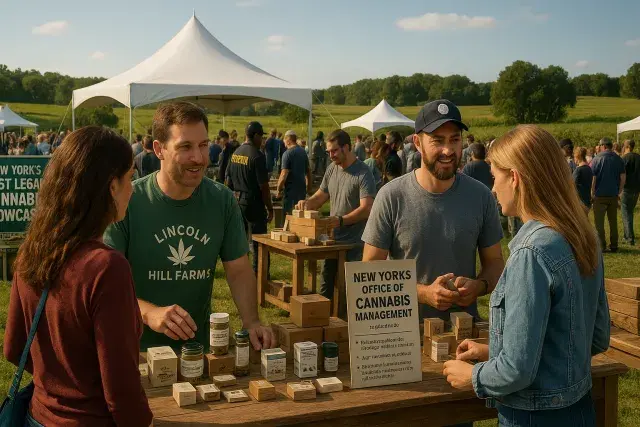
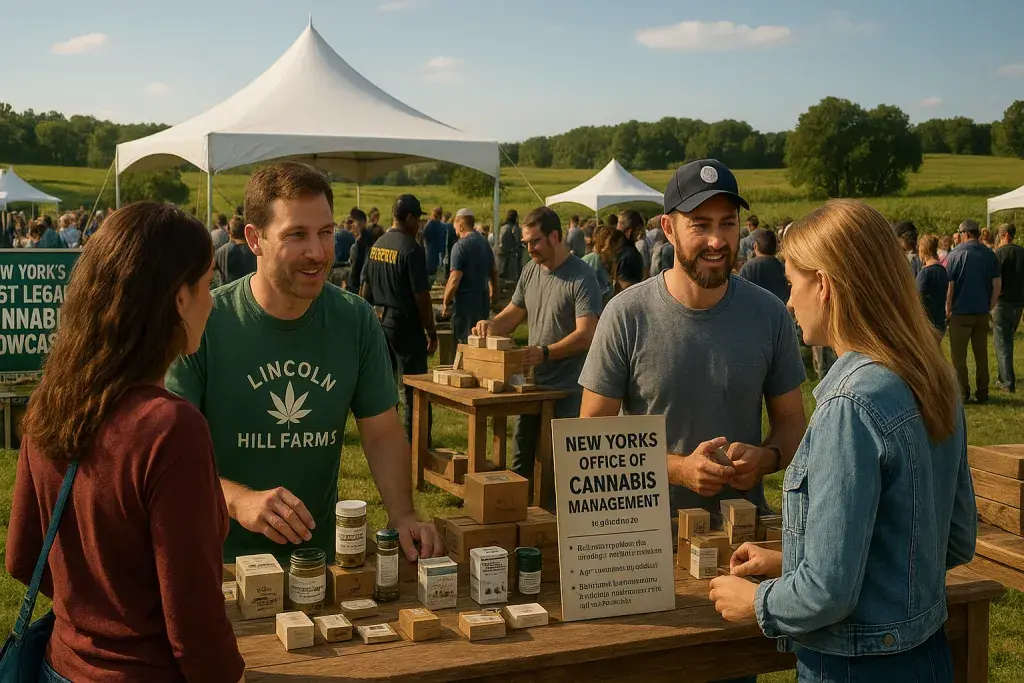
On Sunday, Lincoln Hill Farms in Gorham, New York hosted the state's first legal cannabis showcase - a low-key but legally significant event where attendees purchased small-batch, farm-to-table cannabis products directly from a dozen licensed local cultivators. The event wasn't just a market day. It was the first real-world test of a regulatory framework years in the making, and one that other licensed operators across the state are watching closely.
For small cultivators in particular, the showcase format represents something that standard wholesale channels rarely offer: direct consumer access. Brian Mastrosimone, owner of Lincoln Hill Farms, described the event coordinators as "super excited" to make history. Bryce Serpe, owner of Circle Hill Rosin, framed the opportunity more commercially - the ability to meet customers face-to-face, tell the story behind the product, and build brand recognition outside a licensed dispensary's four walls. That kind of relationship-building is genuinely difficult to replicate through a wholesale menu or a third-party retailer. It's worth noting how other states have handled similar retail expansion models: operators looking at analogous direct-to-consumer frameworks in other regulated markets - including tools built through a cannabis retail platform for Arizona - have found that compliance infrastructure matters as much as the event itself, particularly around point-of-sale tracking, age verification, and real-time inventory reporting.
New York's Office of Cannabis Management approved the regulatory framework permitting showcases and event sales back in 2023. Governor Kathy Hochul signed the enabling legislation on March 20, 2025. The rules carry meaningful compliance requirements. A qualifying showcase must include a minimum of three licensed cultivators, and sales must be conducted in partnership with a licensed adult-use dispensary - meaning the dispensary carries the retail license liability, the compliance obligations, and responsibility for ensuring that all products sold are both licensed and tested. The events are restricted to municipalities that already permit retail cannabis sales, and organizers must demonstrate that the attendee population is predominantly adult.
What the Compliance Structure Actually Requires
On paper, the showcase model looks like an open-air farmers market. In practice, it carries the same compliance weight as a licensed retail storefront. Every product sold must have passed state-mandated lab testing with a certificate of analysis on file. Compliant packaging and labeling - child-resistant, properly dosed, without marketing language that targets minors - applies to every unit. The licensed dispensary partner bears responsibility for maintaining accurate seed-to-sale records, which in New York means real-time entries into the state's tracking system. Age verification at point of sale is non-negotiable.
That's a meaningful operational lift for small cultivators who may be accustomed to the relative simplicity of wholesale transactions. At a showcase, they're not just dropping product at a distribution point - they're participating in a live retail environment where compliance gaps carry real licensing risk. For the dispensary partner, the stakes are even higher. Any enforcement action tied to the event flows back through the licensed retailer.
A New Sales Channel - With Narrow Parameters
The municipal restriction matters. New York's cannabis rollout has been uneven, with a substantial number of localities opting out of retail sales. That opt-out geography effectively limits where showcases can legally operate, which means the events won't be evenly distributed across the state. Cultivators in opt-out counties don't have a clear path to showcase participation without traveling into compliant jurisdictions - a logistical and economic barrier that falls harder on smaller farms with limited transportation infrastructure.
The Office of Cannabis Management's authorization also extends to concerts, festivals, and other large-scale events - which opens a different category of commercial opportunity, and a different compliance environment. High-traffic events introduce variables that a controlled farm showcase doesn't: crowd size, vendor coordination, security requirements, and the challenge of maintaining accurate inventory records across a busy sales day. Dispensary operators considering event partnerships should factor in POS system capability, staff training, and how their seed-to-sale reporting holds up under real-time transaction pressure.
The Broader Signal for Licensed Operators
What Sunday's event signals, more than anything, is that New York's licensed market is finding ways to extend beyond the standard dispensary model. For cultivators who have spent years navigating licensing delays and a market that has struggled with illicit competition, a direct-to-consumer channel - even a limited one - carries real commercial value. The brand-building potential alone is significant for small operators who lack the wholesale leverage of larger multi-site producers.
For dispensary operators evaluating event partnerships, the decision isn't simply about revenue. It's about whether the operational and compliance infrastructure can support a retail environment outside the controlled conditions of a licensed storefront. That's a genuine business question - and one worth answering carefully before signing on as the licensed partner for the next showcase.