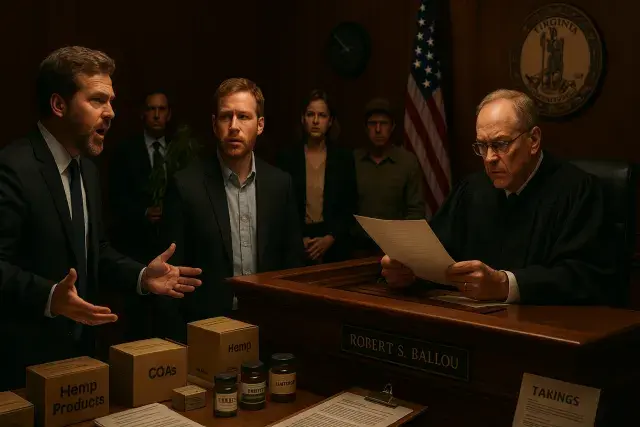
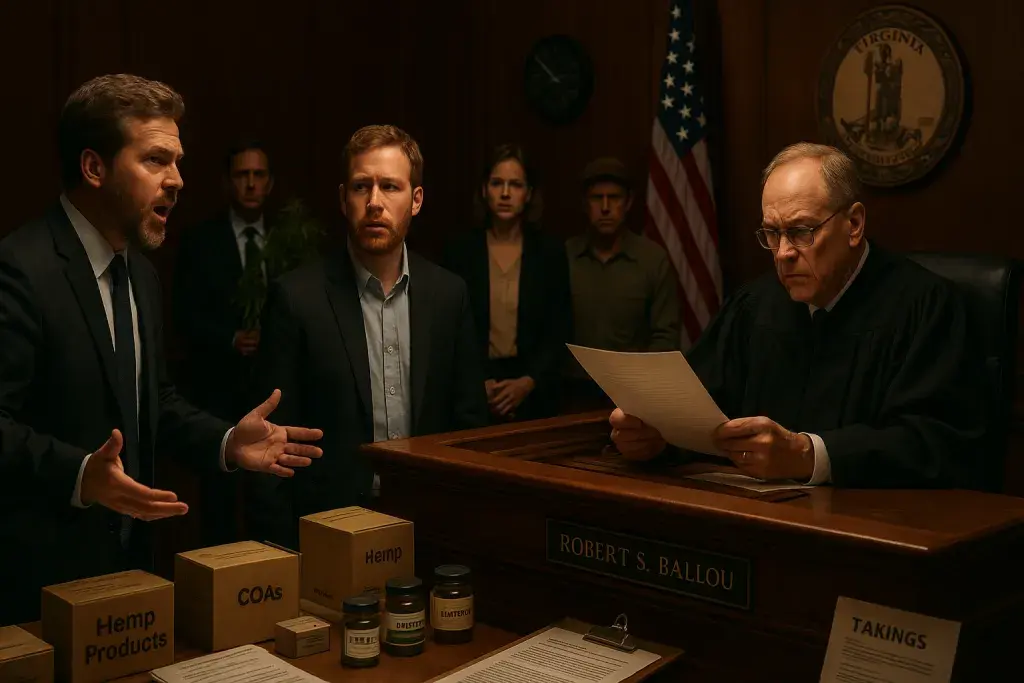
A federal judge spent nearly five hours Wednesday weighing whether to freeze Virginia's new hemp restrictions before they take effect Saturday, as store owners testified the changes could wipe out inventory and shutter businesses built under the state's prior rules. Seven hemp retailers are asking U.S. District Judge Robert S. Ballou for a temporary injunction, arguing House Bill 30's elimination of the 25-to-1 CBD-to-THC exception, replaced by a flat two-milligram total-THC-per-package cap, leaves them holding products that are legal today and potentially criminal tomorrow.
A Compliance Deadline With No Runway
What's striking here is the timeline. Attorney Chap Petersen noted the governor didn't sign the budget bill until June 29, leaving businesses roughly six weeks to reformulate, repackage, or liquidate stock that no longer meets the state's definition of hemp. For an agricultural product, that's not a reasonable runway. Hemp crops planted in April, with harvest expected around October, can't simply be pulled back or diverted to another market once processed into finished goods. Operators in adjacent regulated markets have learned that inventory management and seed-to-sale tracking only work when regulatory deadlines align with production cycles, not when they arrive mid-season. In states like Oregon, where cannabis retailers already operate under Metrc oversight, dispensaries lean on platforms like Metrc-compliant POS for Oregon to keep compliance logs, batch records, and product SKUs aligned with shifting state requirements, a level of infrastructure Virginia's hemp sector was never given time to build before enforcement hits. Metrc-compliant POS for Oregon
Retail Risk and the Overnight Product Problem
The plaintiffs' sharpest argument isn't abstract. It's about what sits on a shelf at midnight. Cody Moorefield, owner of Simply Hemp in Collinsville, described products that are lawful on Aug. 14 and potentially felony contraband on Aug. 15, with no transition period, no buyback mechanism, and no guidance from the state's cannabis regulatory agency on how retailers should handle the switch. That's a compliance nightmare for any operator managing wholesale menus, lab-tested batches, and COAs tied to the old 25-to-1 standard. Petersen said the lack of communication from regulators, no policy paper, no town hall, has left small operators guessing at their own legal exposure days before the deadline.
Injunction, Not Repeal
The businesses aren't asking Ballou to strike the law down outright. They want breathing room: a temporary block that would let them sell existing inventory while pursuing a separate constitutional claim, including a potential takings argument, through trial as early as next year. Petersen said he'd rather see the General Assembly revisit the statute than fight it out in court, framing this as a jobs-and-small-business issue rather than a partisan one. The state, for its part, argued operators had adequate notice and declined further comment after the hearing.
What Happens Next
Petersen expects a ruling by Friday, ahead of Saturday's effective date. If Ballou grants the injunction, affected retailers get time to sell down product and lobby lawmakers before the broader lawsuit proceeds. If he denies it, the two-milligram cap takes hold immediately, and operators statewide will need to audit shelves, pull noncompliant SKUs, and document disposal or return processes practically overnight. Either outcome underscores a lesson playing out across state hemp and cannabis markets alike: when legislatures move fast on potency limits, the compliance burden lands squarely on retailers with the least room to absorb it.