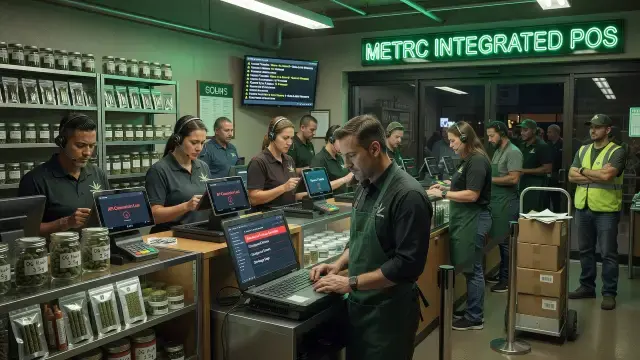
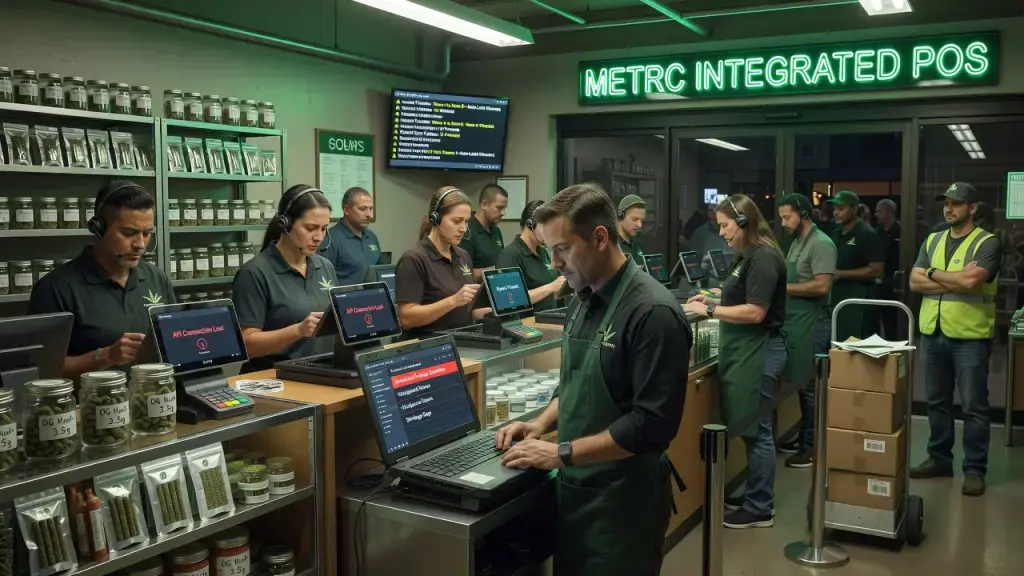
Most dispensary operators evaluating a point-of-sale system check one box: does it talk to METRC. The demo shows packages syncing, sales reporting, a green status light glowing in settings. Nobody in that meeting asks what happens when the state's system stops answering - and it will, often on the busiest night of the week, with a line stretching past the door.
The Sync Test Is the Wrong Test
A working connection to METRC under ideal conditions tells you almost nothing about how a POS behaves under stress. Seed-to-sale tracking systems are run by individual states, and they go offline for maintenance, outages, and unexplained slowdowns with some regularity. The real diagnostic question isn't whether your POS can push package data and pull sales figures when everything is calm. It's whether your registers can still ring a sale when the API can't be reached, and whether that transaction gets queued and reported automatically once service returns. A system that simply stops selling during an outage isn't a compliance tool - it's a liability sitting at the counter.
Where the Gaps Actually Open Up
Package reconciliation is where trouble starts quietly. If a manifest arrives short or a package ID doesn't match, the moment that gets flagged determines whether it's a paperwork fix or a shrinkage problem nobody can explain later. The same logic applies to voids and returns: a refund that zeroes out a POS line item without adjusting the corresponding METRC package quantity leaves the state record wrong, through no fault of the budtender who processed it. Category and tax mapping carries similar risk when it depends on manual entry during receiving rather than pulling directly from the package tag. Each of these is a small operational decision that, multiplied across a few hundred transactions a week, becomes a compliance exposure.
Multi-Location Operators Face a Different Problem
Single-store checklists don't account for internal transfers. When product moves between a company's own locations, manifests have to reconcile on both ends, and a single mismatch can block receiving until someone on the compliance side resolves it by hand - while a delivery driver waits. Rate limits compound this. Several states throttle how often a POS can hit METRC endpoints, and operators pushing real-time updates across a dozen locations can quietly exceed that ceiling. Updates stack in a queue, and a count drifts for days before anyone notices. Ask any vendor how their system batches and retries requests before assuming "integrated" means the same thing everywhere.
What an Audit Trail Should Actually Show
Shrinkage - the gap between what METRC says is on hand and what's physically on the shelf - is easiest to catch early and hardest to trace later. A functional audit trail should let a compliance manager pull a record of when a package synced and who adjusted it, without filing a support ticket or exporting spreadsheets for manual reconciliation. That capability matters as much as the sync itself, because a late package update or an unadjusted return can trigger a violation even when every staff member followed procedure correctly.
- Confirm whether sales continue locally during a METRC outage and sync automatically once service resumes
- Ask when package mismatches get flagged - at intake or after the product has left the store
- Verify that refunds adjust METRC quantities, not just the POS line item
- Request sync frequency in writing, not as a verbal assurance of "real-time" integration
- Check how the system handles API rate limits across multiple locations
None of this is glamorous work, and vendors rarely volunteer it in a sales call. But the operators who ask these questions before signing a contract are the ones who avoid explaining a compliance gap to a regulator after the fact.