
A new kind of storefront opened its doors in Negaunee Township on Tuesday - and for a region that has gone without a licensed medical cannabis dispensary, it marks a real shift in access. The Fire Station, owned by Stosh Wasik, held its soft opening at 11 a.m. and drew a steady flow of customers through the day. Medical marijuana has been legal in Michigan since 2008, but legal access, in practice, has always depended on where you live.
A Long Road to a Soft Opening
Wasik has been working toward this for approximately three years - a timeline that will surprise no one familiar with the licensing and regulatory machinery surrounding cannabis dispensaries. State-level approval, local zoning compliance, background checks, inventory tracking requirements, and the particular friction of operating in a cash-heavy industry with limited banking access: the obstacles between wanting to open a dispensary and actually opening one are substantial. "It's been a long, but really fun road," Wasik said Tuesday, "and it's exciting to finally be able to bring this to Marquette County."
The Fire Station is strictly medical. No recreational sales. To purchase, you must hold a valid medical marijuana registry identification card - Michigan's or any other state's, as the store serves qualifying patients from across the country. That's worth pausing on: Michigan's medical program recognizes out-of-state cards, which means residents and visitors with documented qualifying conditions can walk in and make a purchase without navigating a separate in-state registration.
What's on the Shelves
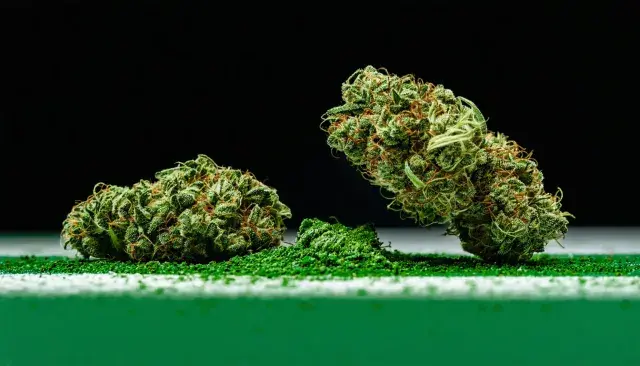
The inventory spans the standard product categories now common to licensed dispensaries: flower, distillate cartridges, and edibles. Each category carries a distinct profile of onset time, dosing precision, and bioavailability - the degree to which the active compounds actually reach the bloodstream and produce effect. Edibles, for instance, metabolize through the digestive system and can take significantly longer to act than inhaled or sublingual forms; patients new to medical cannabis are generally advised to start low and go slow. A licensed dispensary, unlike an informal source, is positioned to give that kind of guidance directly.
The store operates seven days a week, 11 a.m. to 7 p.m. Consistent hours and a fixed, licensed location matter more than they might seem to - patients managing chronic conditions, pain, or treatment side effects don't benefit from unpredictable supply.
Access, Geography, and the Gap Dispensaries Fill
Michigan legalized medical marijuana through a voter-approved ballot initiative sixteen years ago, yet rural and semi-rural counties have lagged significantly behind urban centers in licensed dispensary presence. The reasons are structural: lower population density makes the economics harder, local government attitudes toward cannabis have varied widely, and the regulatory burden falls proportionally heavier on single-location operators than on multi-state retail chains.
What that gap has meant, practically, is that registered patients in underserved areas have historically had to drive long distances to access legal product - or turn to gray-market sources that carry none of the testing, labeling, or dosage transparency that licensed dispensaries are required to provide. A licensed facility must sell only product that has been tested by a state-certified laboratory for potency, pesticides, heavy metals, and microbial contaminants. That's not a minor detail for a patient using cannabis as part of a treatment regimen.
The Fire Station doesn't solve every access question in Marquette County. A soft opening is, by definition, an early stage - inventory breadth, staffing depth, and patient volume will all develop over time. But the first licensed dispensary in a county is, at minimum, a baseline. And for the patients who drove in on Tuesday, it was apparently enough to keep the line moving all day.