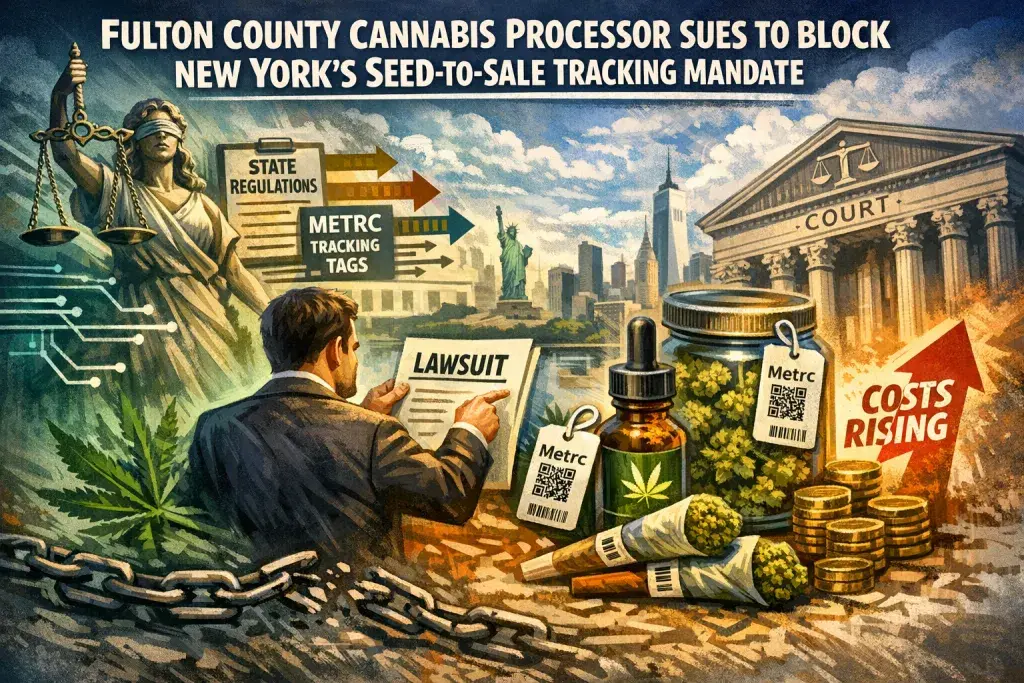
A Fulton County marijuana processor has launched a constitutional challenge against New York's new mandatory seed-to-sale tracking system, which requires unique tags on every cannabis item and took effect this week. Veterans Holdings, Inc., filed the lawsuit in state Supreme Court in Albany, seeking to halt enforcement on itself and potentially the entire industry. The case highlights tensions between state regulators' push for tighter controls and industry claims of overreach amid rising operational costs.
Lawsuit Targets Tags and Regulatory Authority
Veterans Holdings argues that the Office of Cannabis Management exceeded its powers by mandating tags on individual items rather than batches, a granularity not specified in the marijuana legalization law. The suit contends regulators created rules without legislative backing or specialized expertise, imposing irreparable harm through higher costs. State Supreme Court Justice Thomas Marcelle issued a temporary block on enforcement for the plaintiff Wednesday but set oral arguments for Friday, leaving open the possibility of a broader injunction.
The system relies on identifier tags purchased exclusively from Metrc, LLC, the Florida firm holding New York's track-and-trace contract. Licensees cannot print their own tags, a requirement the lawsuit says drives up expenses unnecessarily. In response to backlash, the Office of Cannabis Management announced Monday that Metrc would supply 20 million retail item tags free to processors, aiming to ease initial burdens during the shift.
Industry Strains Under Tight Implementation Timeline
New York's cannabis stakeholders, including the Cannabis Association of New York, describe a scramble to comply with the digital tracking from seed germination to retail shelves. The system seeks to curb illicit products flooding the market, often smuggled from states like California and repackaged as licensed goods, which undercuts legal cultivators. Damien Cornwell, association president, warned Governor Kathy Hochul of operational chaos for small businesses, many of whom invested in BioTrack—a system Metrc acquired last summer—only to face a sudden switch.
Zach Sarkis, a Rochester grower, estimated his costs could surge dramatically from the change, citing months of prior onboarding wasted. The rollout coincides with peak harvest and sales seasons, diverting staff from revenue-generating tasks and risking lost sales. Cornwell requested a grace period for good-faith efforts, noting lean operations leave little room for technical overhauls amid year-end tax pressures.
Broader Turmoil at Cannabis Oversight Agency
The tracking dispute emerges amid upheaval at the Office of Cannabis Management, where Governor Kathy Hochul last week demanded the ouster of Executive Director Felicia A.B. Reid and deputy general counsel James Rogers. Reid's exit followed the dropped enforcement against Long Island's Omnium Canna, accused of illegally subletting its license; the agency scrubbed its related press release. Spokeswoman Taylor Randi Lee emphasized months of prior communication on the December 17 deadline and ongoing support for licensees.
Experts view seed-to-sale tracking as essential to protect licensed markets from black-market infiltration, despite the pain points. New York's recreational cannabis sector, still maturing since legalization, grapples with these controls as a trade-off for legitimacy and safety, potentially reshaping compliance costs and market dynamics long-term.