Cannabis Trade Sites Face Scrutiny Over Automated Access Blocks
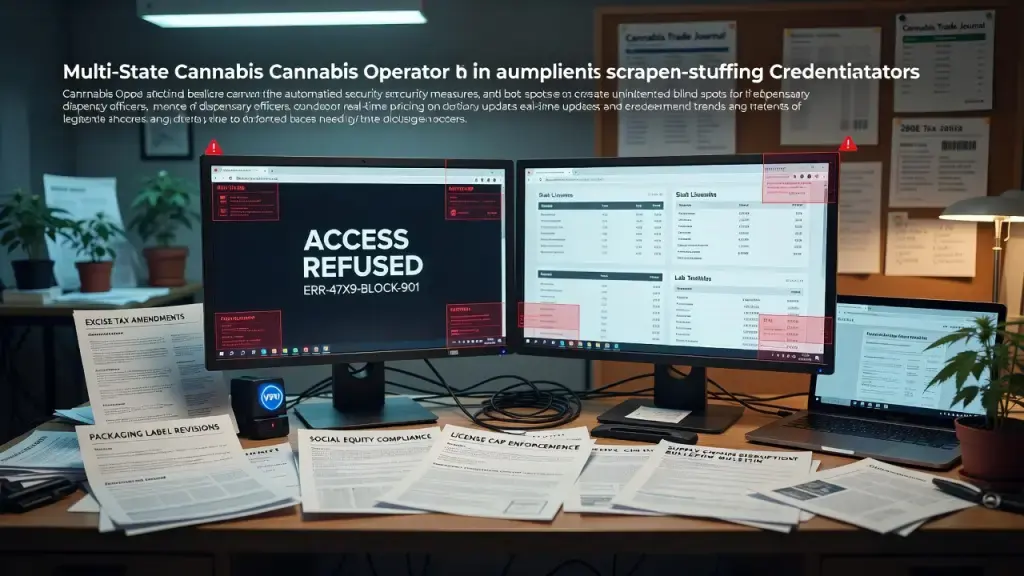
A blocked-browser message, the kind that greets a visitor with "access refused" and a cryptic reference number, has become routine background noise across cannabis trade media and compliance portals. For dispensary operators and compliance teams who rely on these sites daily, that noise is a business problem, not just an inconvenience.
Why bot filters keep tripping up legitimate users
Most B2B cannabis platforms - trade publications, wholesale marketplaces, state licensing portals, METRC-adjacent reporting tools - run automated bot-detection layers to block scrapers, credential-stuffing attempts, and competitors harvesting pricing data. Fair enough, given how much proprietary information sits behind these logins: wholesale menus, compliance logs, lab testing results, SKU-level inventory. The trouble is that the same filters built to stop bad actors often snag ordinary staff, especially anyone using a VPN, a shared office network, or browser privacy settings common at multi-state operators managing access across several locations.
In practice, though, these systems rarely explain themselves well. A reference code and a terse denial message tell a compliance manager nothing about what triggered the block - IP reputation, browser fingerprinting, geographic mismatch, or simple rate limiting. For an industry already buried in audit trails and recordkeeping obligations, one more opaque access barrier is not a small thing.
What this means for operators who depend on trade intelligence
Dispensary owners, multi-state operators, and compliance officers use trade sites and licensing portals for more than reading news. They check regulatory updates, track enforcement trends, confirm packaging and labeling rule changes, and monitor supply chain disruptions that affect wholesale pricing. When access gets refused without warning, the downstream effect is real: a missed update on a packaging deadline, a delayed response to a recall notice, a compliance log that falls out of date.
That matters more in cannabis than in most retail sectors because the regulatory floor keeps shifting state by state. License caps change. Social equity provisions get amended. Excise tax rules get rewritten mid-cycle. Operators who can't reliably reach the sources tracking those changes are operating with a blind spot, and in a 280E environment where margins are already thin, blind spots cost money.
The broader pattern: compliance friction is everywhere in this industry
What's striking here is how familiar this feels to anyone running a licensed cannabis business. Point-of-sale systems reject transactions over cashless payment restrictions. Seed-to-sale tracking software times out during inventory reconciliation. Banking relationships collapse without notice because a processor got nervous about federal risk exposure. Access refusals on trade sites are a smaller version of the same structural problem: an industry still treated as higher-risk by the infrastructure it depends on, from payment rails to web hosting to data verification tools.
- Verify whether blocked access stems from network configuration, VPN use, or browser settings before assuming a site-wide outage
- Keep alternate channels - direct regulator contacts, trade association newsletters, state portal subscriptions - as backup when a single source becomes unreliable
- Document access failures internally if they affect time-sensitive compliance deadlines, in case a dispute over missed notifications arises later
None of this is dramatic. But for an industry where paperwork, timing, and recordkeeping carry real regulatory weight, even a browser-level inconvenience deserves a second look rather than a shrug.