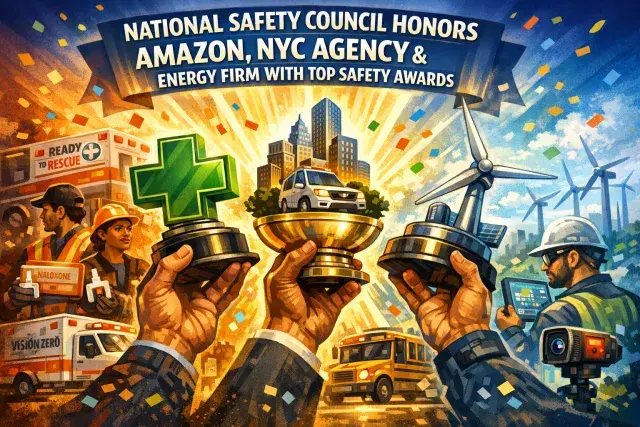
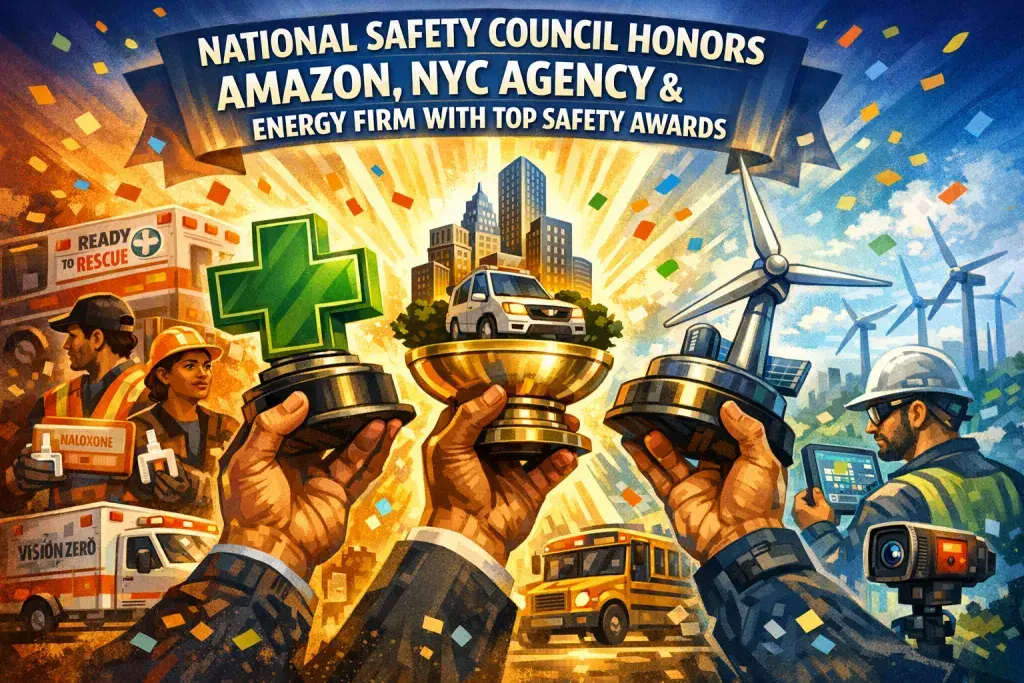
The National Safety Council awarded its 2025 Green Cross for Safety honors to three organizations advancing workplace and community protections during a Denver celebration on September 16. Amazon and Emergent BioSolutions earned Safety Advocate awards for expanding naloxone access amid the opioid crisis, while the New York City Department of Citywide Administrative Services took Safety Excellence for fleet safety upgrades, and Puget Sound Energy claimed Safety Innovation for wind turbine monitoring tech. These recognitions, presented at the 26th annual event sponsored by U.S. Steel, also raised over $788,000 for safety initiatives, underscoring corporate commitments to prevent injuries and fatalities.
Combating Opioids Through Workplace Naloxone Access
Amazon responded to calls from public health officials by stocking more than 1,200 North American facilities with naloxone by year's end, training all 36,000 first aid-certified employees on its use. The company joined White House panels and national media discussions in 2024 to urge other employers to follow, positioning itself as a leader in addressing the opioid epidemic that claims tens of thousands of lives annually in the U.S. Emergent BioSolutions complemented this by installing over 40 opioid emergency units in its own sites, distributing 1,300 product cartons to staff, and launching the Ready to Rescue campaign, which delivered 2,700 kits to campuses and public venues. Their efforts aim to normalize naloxone alongside everyday first aid tools like AEDs, potentially saving lives in settings from warehouses to hospitality venues where overdoses can occur unexpectedly.
NYC Leads Municipal Fleet Safety with Vision Zero Tech
Operating the nation's largest city fleet of over 28,500 vehicles plus 10,000 contracted school buses, the NYC Department of Citywide Administrative Services implemented over 100,000 safety upgrades via its Safe Fleet Transition Plan, first adopted in 2017 and updated in 2019 and 2025. Developed with the U.S. DOT Volpe Center, the plan enforces Vision Zero principles—New York City's 2014 pledge to eliminate traffic deaths—through measures like the country's largest rollout of Intelligent Speed Assistance, which caps vehicle speeds, and mandatory sideguards on trucks to prevent pedestrian underride crashes. These technologies address common urban risks such as speeding and blind spots, demonstrating how policy-driven retrofits can scale across massive operations to reduce collisions and support broader street safety goals.
Innovative Monitoring Prevents Wind Turbine Hazards
Puget Sound Energy deployed miniaturized SYTIS TC-90 infrared cameras inside wind turbine nacelles and electrical enclosures, enabling remote anomaly detection and email alerts to avert fires and arc blasts. This shift from hazardous tower climbs and calendar-based checks to condition-based maintenance minimizes technician exposure to live panels and speeds issue resolution. After initial nacelle success, the utility expanded to field converters, positioning the technology as a model for the renewable energy sector where high-voltage equipment poses persistent risks amid growing wind power adoption.
NSC CEO Lorraine Martin praised the winners for their far-reaching impact on workplaces and communities. Their approaches highlight how targeted interventions—from medication access to smart tech—can mitigate entrenched safety challenges.