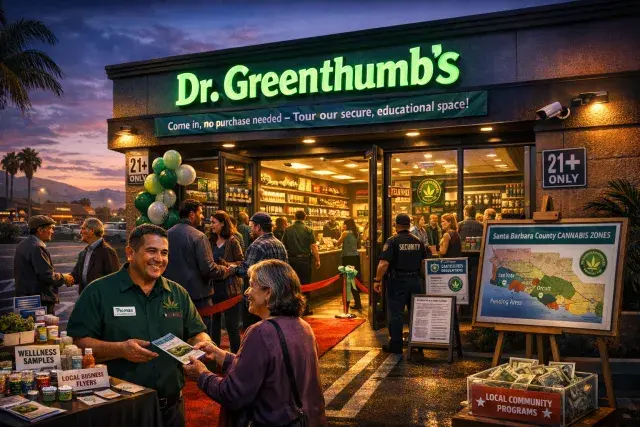
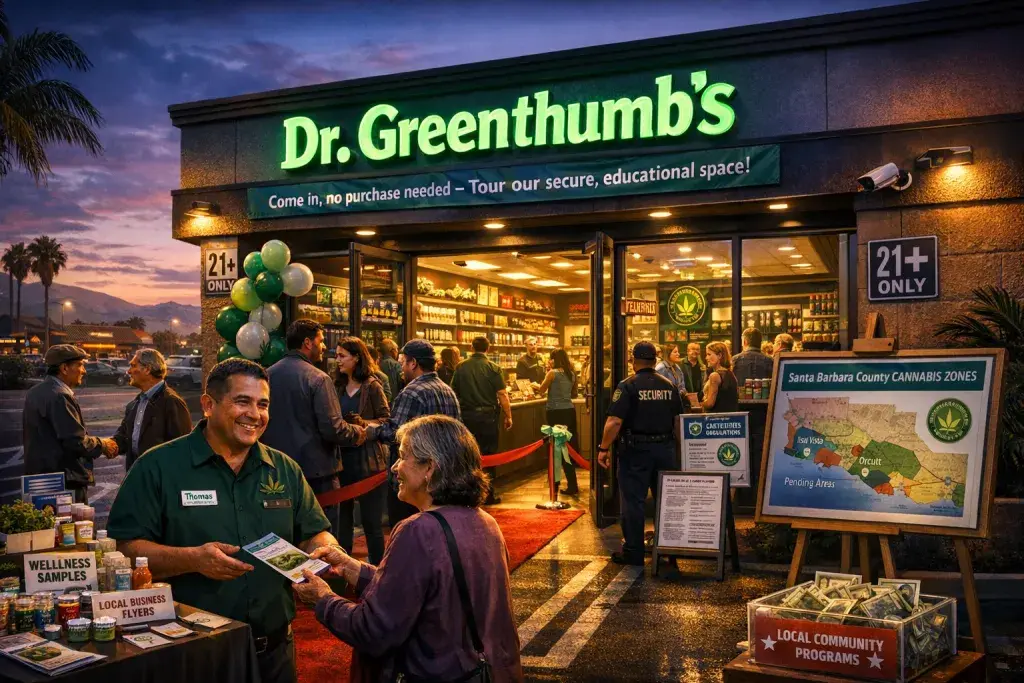
Dr. Greenthumb’s cannabis dispensary swung open its doors on December 7 at 1604 East Clark Ave, Ste. 101, in Orcutt, becoming the third of six approved locations in unincorporated Santa Barbara County to launch. As the second storefront in the Santa Maria Valley, it offers locals a closer, regulated source for cannabis products, signaling a measured expansion amid growing demand for safe, community-integrated retail.
County’s Strict Framework Ensures Community Fit
Santa Barbara County caps storefront licenses at six under Chapter 50, Section 50-7, to prevent oversaturation. These sites span Eastern Goleta Valley, Isla Vista, Los Alamos, Orcutt, Santa Ynez, and Toro Canyon/Summerland, with Isla Vista, Orcutt, and Santa Ynez now operational. Public input shaped priorities via pre-application meetings, feeding into a criteria-based process demanding 85% scores for qualification—10% on business proposals, 90% on neighborhood compatibility.
- Key requirements: Customer and community education plans, odor control, parking strategies, and design alignment.
- Dr. Greenthumb’s topped Orcutt rankings, securing land use permits, business licenses, and state Department of Cannabis Control approval.
This rigor reflects broader public health trends, prioritizing integration over unchecked growth, much like alcohol retail zoning that balances access with neighborhood harmony.
Local Engagement and Product Safety at Forefront
General manager Thomas Casarez highlights Dr. Greenthumb’s “grocery store model,” where shoppers browse diverse products—from sleep aids to pain relievers—with staff guidance. All California cannabis undergoes third-party testing for contaminants and pesticides, ensuring consumer safety amid rising medical use for chronic conditions.
Positive community feedback, especially from Santa Maria residents, underscores convenience. The dispensary fosters ties through local business support and events, countering stigma via open invitations: “Come in, no purchase needed,” to showcase security and education.
Implications for Health, Culture, and Economy
As cannabis normalizes, such dispensaries bridge recreational and therapeutic gaps, aligning with data showing 20-30% of U.S. adults using it for wellness. In rural valleys like Santa Maria’s, they reduce travel burdens, potentially curbing unregulated markets while boosting tax revenues for community programs.
Yet challenges persist: Remaining sites face permitting hurdles, and success hinges on odor control and youth prevention. Overall, Dr. Greenthumb’s launch exemplifies how thoughtful policy can enhance safety, destigmatize use, and integrate cannabis into everyday health and lifestyle choices.