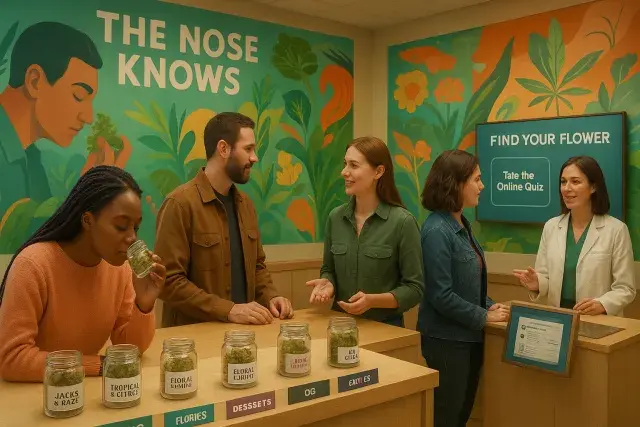
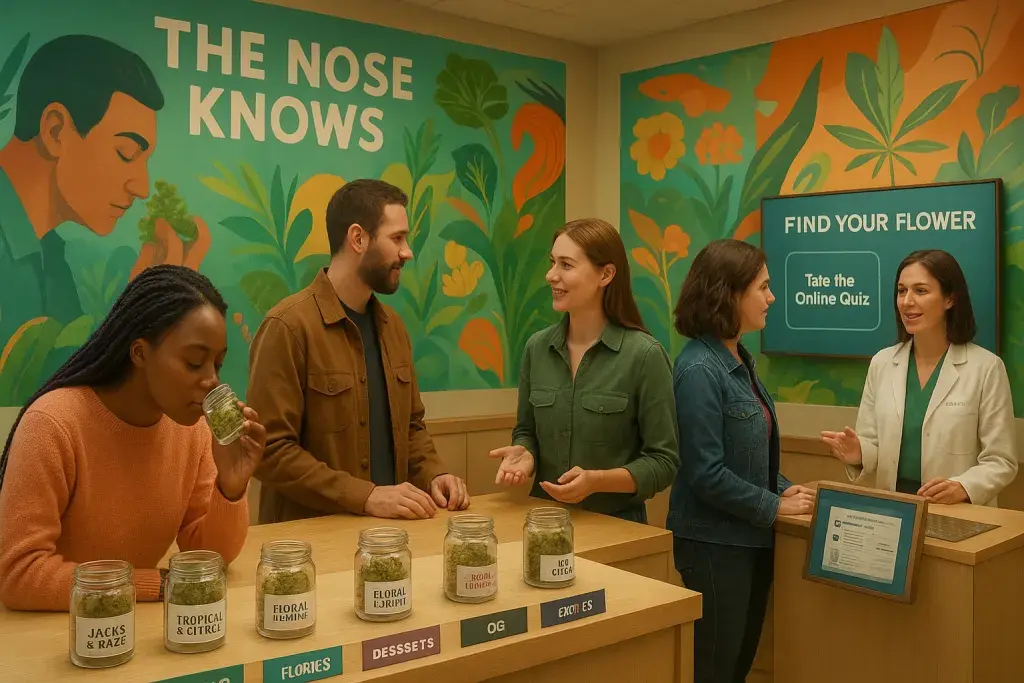
MariMed's Nature's Heritage brand has launched a consumer education campaign built around a straightforward argument: THC percentage is a poor guide for purchase decisions, and aroma is a better one. The campaign, called "The Nose Knows," was developed in collaboration with Dr. Riley Kirk, a Ph.D.-trained pharmaceutical scientist specializing in cannabis and pharmacology, and draws on consumer surveys conducted across Massachusetts, Maryland, and Illinois. It organizes cannabis strains into six scent-and-effect categories - Jacks & Haze, Tropical & Citrus, Floral & Earthy, Desserts & Sweets, OG, Gas & Chem, and Exotics - and rolls out through in-store activations, sensory displays, artist-created murals, and an online "Find Your Flower" quiz on the Nature's Heritage website.
The business logic here is worth examining for dispensary operators, not just as a branding exercise but as a retail operations question. Budtenders already know the frustration: a customer walks in, asks for "the strongest thing you have," buys based on the highest THC number on the shelf, and comes back dissatisfied. That cycle drives returns, erodes loyalty, and puts pressure on floor staff to manage expectations that potency-first marketing helped create. Point-of-sale systems at well-run dispensaries - you can see the platform that handles this at the SKU level - can track which products generate repeat purchases versus one-time buys, giving operators data to identify where customer education gaps are actually costing them revenue. Campaigns like this one have a direct operational implication: if consumers arrive with a better framework for choosing products, conversion quality improves and return rates can drop.
The potency fixation in cannabis retail isn't accidental. It emerged, in part, because THC percentage is one of the few metrics that shows up consistently on Certificates of Analysis and compliant packaging across licensed markets. Terpene profiles are required on lab reports in several states, but the way that data translates to packaging varies significantly by jurisdiction, and many consumers have never been given a practical reason to read it. Dr. Kirk's point - that consumers would achieve more personalized experiences by following scent rather than chasing a number - aligns with how researchers have discussed the entourage effect and terpene-driven variation in cannabis experiences. What "The Nose Knows" attempts to do is translate that complexity into something a consumer standing at a display case can actually use.
In-Store Activation as a Retail Education Tool
The campaign's format is worth noting for multi-state operators and wholesale brand managers thinking about how brand equity gets built at the point of sale. Nature's Heritage is using locally commissioned murals and sensory-driven displays to transform retail floor space into something closer to an educational environment. That's a meaningful distinction from standard shelf placement or digital menu promotion. In regulated cannabis markets, advertising is tightly constrained - many states prohibit outdoor advertising, restrict digital channels, and limit what can be said about effects. The retail floor, within compliance limits, remains one of the few places a brand can communicate directly and substantively with a consumer. Using that space to educate rather than simply promote is a defensible approach, and it positions budtenders as guides rather than just clerks.
What This Means for Operators and Wholesale Partners
For dispensary owners carrying Nature's Heritage products in Massachusetts, Maryland, or Illinois, "The Nose Knows" activation has a few practical implications. First, sensory displays - products available for smell - require inventory management discipline. Open flower jars or sample containers increase the potential for product shrinkage and need clear protocols in compliance logs. Second, the campaign depends on staff familiarity with the six aroma categories; that's a training obligation, not just a visual merchandising change. Third, the online quiz component extends the brand's reach into the pre-purchase decision, which means some consumers will arrive at the dispensary with a category preference already formed - a dynamic that simplifies the budtender conversation but also requires that wholesale menus and in-store inventory are stocked accordingly.
The broader trend this sits inside is real. Cannabis retail is maturing past the novelty phase in most adult-use markets, and operators are under margin pressure from excise taxes, compliance costs, and wholesale price compression. Customer retention matters more now than it did when legal dispensaries were the only option in a newly opened market. Campaigns that shift consumer behavior toward repeat, informed purchasing - rather than one-time, disappointed experimentation - have a measurable economic rationale. The thing is, education-based marketing is a long game. It requires brand consistency across retail partners, trained floor staff, and stocking decisions that actually reflect the campaign's structure. Done poorly, it's wallpaper. Done well, it reshapes how a product category gets sold.