
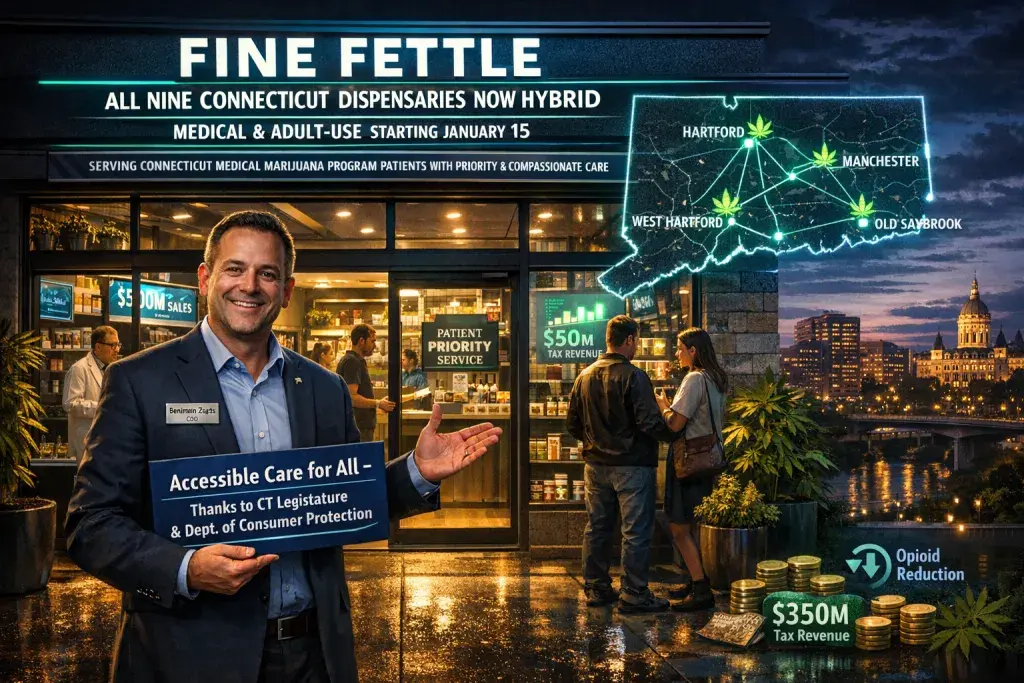
In Hartford, Connecticut, Fine Fettle announced that all nine of its cannabis dispensaries statewide will transition to hybrid facilities starting Thursday, January 15, serving both medical patients and adult-use customers. This shift promises greater access to medical cannabis, operational efficiencies, and a bolstered state program amid evolving regulations.
Key Details of the Hybrid Expansion
Fine Fettle's move aligns with recent Connecticut regulatory updates allowing recreational retailers to integrate medical services. COO Benjamin Zachs emphasized the focus on "accessible, compassionate care," noting that hybrid operations address gaps in patient access, especially in underserved regions.
- Dispensaries in Manchester, Norwalk, Old Saybrook, Waterbury, and West Hartford will lead the conversion, with all nine sites following suit.
- Each location offers remote and in-person consultations with licensed pharmacists, upholding core medical cannabis standards.
- Adult-use sales continue alongside priority service for Connecticut Medical Marijuana Program patients.
Regulatory Context and Driving Factors
Connecticut's cannabis landscape has rapidly evolved since recreational legalization in 2021, with hybrid dispensaries now permitted to streamline operations. This responds to patient complaints about limited medical outlets—previously around 20 statewide—while recreational sales have surged past $500 million annually. Fine Fettle, a key player since entering the medical market in 2020, leverages this to merge inventories, cut redundancies, and enhance supply chain reliability. Zachs credited the legislature and Department of Consumer Protection for enabling "efficiency and equity."
Implications for Patients, Public Health, and the Market
Hybrid models like Fine Fettle's could transform access, reducing travel burdens for patients managing chronic pain, anxiety, or epilepsy through medical cannabis, which studies link to fewer opioid prescriptions. By blending markets, Connecticut avoids the fragmentation seen in states like New York, where separate systems inflate costs. Broader trends show normalization driving equity: lower-income and rural patients gain options, stigma fades, and tax revenues—projected at $350 million this year—fund public health initiatives. Risks remain, including over-commercialization, but regulated hybrids prioritize safety via pharmacist oversight. Looking ahead, this sets a model for sustainable growth, strengthening Connecticut's medical program while meeting adult-use demand.