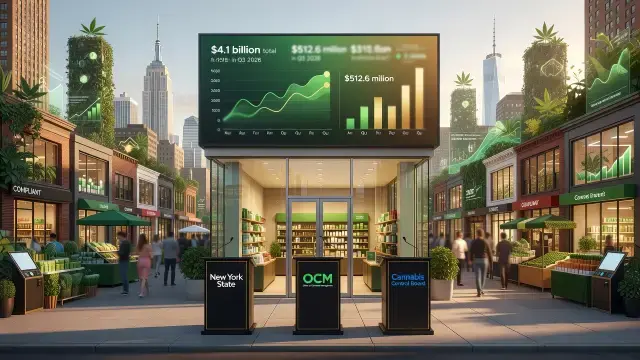
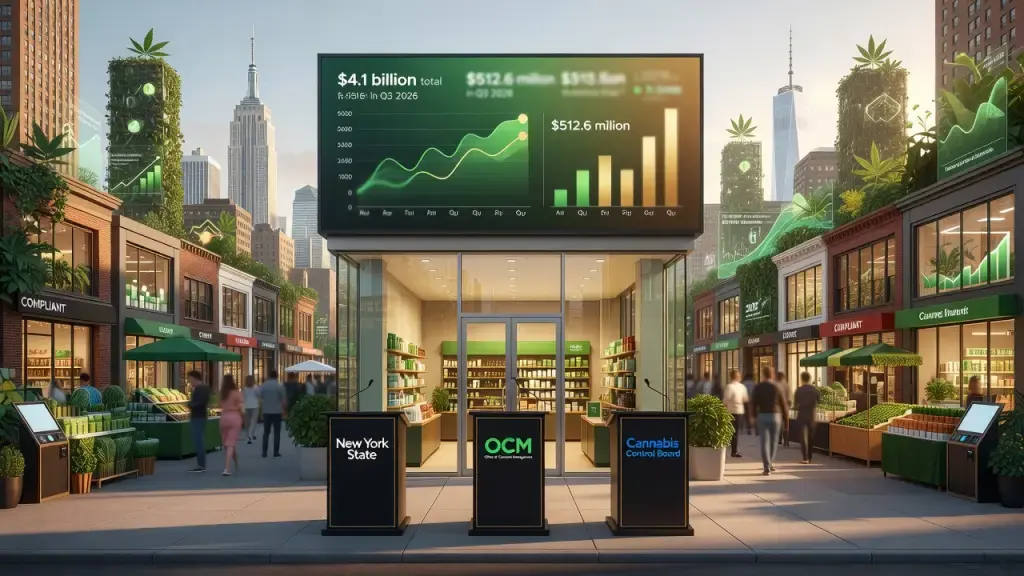
New York's regulated marijuana market has crossed $4 billion in cumulative sales since adult-use retail began in late 2022, a threshold Gov. Kathy Hochul and state cannabis regulators are holding up as proof the program is working. The figure, confirmed by the Office of Cannabis Management, includes roughly $1.5 billion generated so far in 2026, with third-quarter sales alone reaching $512.6 million.
What the Numbers Actually Represent
Four billion dollars sounds like a finish line. It isn't. It's a running total built batch by batch, SKU by SKU, across hundreds of licensed dispensaries now reporting sales through seed-to-sale tracking systems tied to the state's compliance infrastructure. For operators, the number matters less than the trend line underneath it - quarterly sales that have climbed as store counts expanded and as enforcement against unlicensed shops has, at least in theory, pushed more consumer spending into the legal channel. OCM Executive Director John Kagia framed the milestone as belonging to the entrepreneurs and workers who built the supply chain "from the ground up," which is accurate but also glosses over how uneven that build-out has been. Licensing delays, capital access problems, and real estate constraints shaped which operators survived long enough to see this moment.
Equity Promises Meet Operational Reality
Hochul and Cannabis Control Board Chair Jessica Garcia both emphasized that most licenses have gone to equity entrepreneurs, and that cannabis tax revenue is flowing back into affected communities. That's the policy framework New York built from the start - a deliberate contrast to markets that let vertically integrated multi-state operators dominate from day one. In practice, though, equity licensing and business viability are two different problems. Holding a license doesn't guarantee access to a bank account, a reasonable commercial lease, or working capital to stock a budroom through a slow season. The $4 billion figure doesn't tell you how many equity-licensed stores are actually profitable after rent, payroll, compliant packaging costs, and a federal tax code - 280E - that still denies ordinary business deductions to plant-touching operators.
Wage Board Fight Signals the Next Pressure Point
Not everyone in the industry is celebrating without reservation. The Cannabis Association of New York is pushing Hochul to veto legislation creating a Cannabis Wage Board, arguing the measure would inject fresh uncertainty into an industry still absorbing years of regulatory delay and illicit-market competition. That tension - between labor protections and operator margins already squeezed by excise tax obligations and wholesale pricing pressure - is likely to define the next phase of New York's market more than any single sales milestone.
Smaller Moves With Real Retail Consequences
Several lower-profile changes deserve attention from operators. Hochul signed legislation clarifying that microbusinesses can fully participate in cannabis farmers' markets and pop-up events, building on a showcase program OCM began accepting applications for this year. She also signed a zoning bill giving retailers more flexibility around proximity to schools and places of worship - a change that could unlock sites in areas where buffer requirements had effectively blocked licensed stores. Separately, state senators passed a bill addressing medical cannabis reciprocity and pre-rolled product availability, even though those reforms were already enacted elsewhere - a reminder that legislative tidiness often lags behind actual implementation.
- Total legal cannabis sales since late 2022: $4.1 billion
- 2026 year-to-date sales: approximately $1.41 billion
- Third-quarter 2026 sales: $512.6 million
- Hundreds of licensed dispensaries now operating statewide
For operators, suppliers, and landlords watching this market, the headline number is a marketing talking point for the state. The operational story - wage board fights, zoning flexibility, equity licensing follow-through, and the everyday grind of compliant retail - is where the next billion will actually get decided.