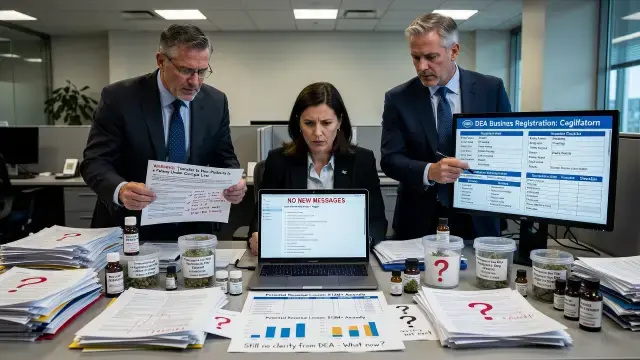
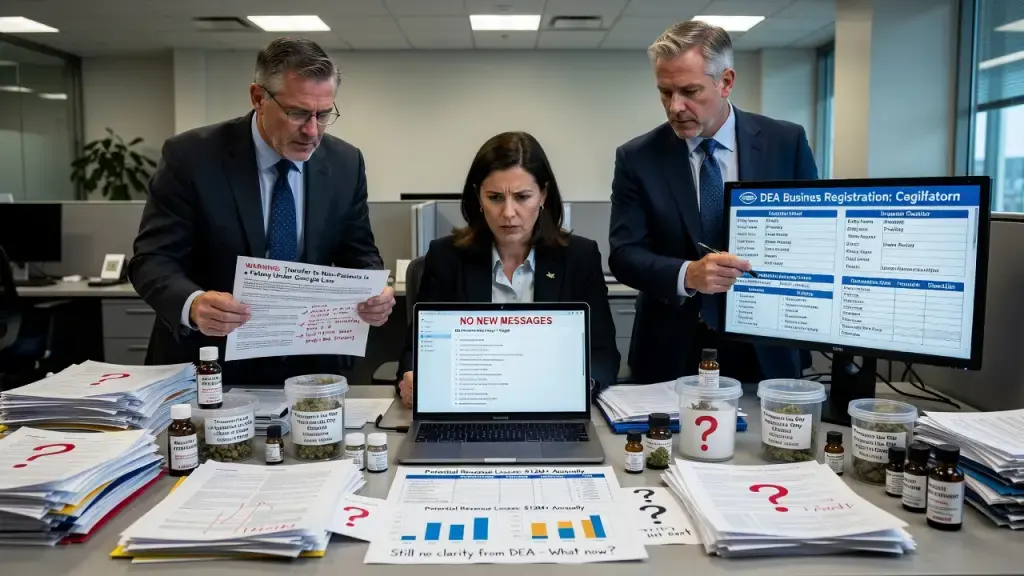
Marijuana rescheduling was supposed to bring clarity. Instead, it's bringing a pile of unanswered emails. Top cannabis regulators in Georgia, Vermont and California say the Drug Enforcement Administration has left them to interpret the biggest shift in federal cannabis policy in decades largely on their own, with little or no technical guidance on how it affects state licensing, labeling and tax structures.
A rule change with no instruction manual
Moving marijuana from Schedule I to Schedule III under the Controlled Substances Act sounds like a single administrative act. In practice, though, it touches nearly every operational layer of a state-licensed cannabis program - packaging requirements, registration procedures, and the tax treatment that has long been a sore point for operators burdened by Section 280E. States don't get to simply wait for federal clarity before acting; medical cannabis boards still have to approve rules, set deadlines, and tell licensees what language belongs on a product label next quarter. Georgia's access commission, for example, is trying to align state warning-label rules with a federal requirement that medical marijuana packaging flag the criminal penalty for transferring product to anyone other than the registered patient. Reasonable enough on paper. But when DEA won't confirm how that requirement should read, state regulators are left guessing - and so are the license holders who have to print the labels.
Regional offices without the answers
What's striking here is the pattern across states with otherwise little in common. Georgia's commission says regional DEA staff in Atlanta and Savannah have been professional but simply don't have authority to weigh in on proposed rule language. Vermont's Cannabis Control Board describes much the same dynamic - a cooperative regional office that's just as in the dark as the state is. A national association of cannabis regulators compiled a formal list of questions for DEA headquarters and reports getting no response at all. That's not a communication delay; that's a communication gap, and it leaves compliance officers, wholesale license holders, and legal teams drafting policy against a federal framework nobody at the agency will explain.
Operational stakes for licensees
For dispensary operators and cultivators, this isn't an abstract turf dispute between regulators. DEA has begun issuing registration forms tied to rescheduling, and inspections tied to those registrations are already underway in some states with established medical programs. California's cannabis regulator notes that enforcement activity appears concentrated in states with clear-cut medical frameworks, while so-called mixed markets - adult-use and medical operating side by side - are seeing less federal attention so far. That unevenness matters for multi-state operators trying to build consistent compliance protocols across different state footprints. A labeling standard, a registration checklist, or an inspection question in one state may not match what shows up in another, because regional DEA offices appear to be applying their own interpretations in the absence of uniform guidance from headquarters.
- Packaging and warning-label language tied to federal transfer-of-drug rules remains unsettled in several states.
- DEA business registration forms are live, but inspection practices vary by region.
- State regulators report no formal implementation guidance from DEA headquarters.
- Tax treatment questions, including 280E implications, remain open pending further federal action.
Why the silence carries risk
Here's the catch: state cannabis programs were built to operate independently of federal recognition, yet rescheduling now asks them to mesh with a federal registration and labeling system they had no hand in designing. Without guidance, states risk drafting rules that conflict with federal requirements down the line, forcing licensees to redo packaging, update point-of-sale compliance logs, or revisit product batches already on dispensary shelves. For an industry still absorbing high effective tax rates and thin margins, duplicate compliance work is not a minor inconvenience - it's a cost center. Regulators in Georgia, Vermont and California are not asking DEA to make rescheduling easier on the industry. They're asking for enough clarity to avoid building state rules on guesswork, which is a fair ask for an agency whose own order now depends, in practice, on the state systems it has been reluctant to talk to.