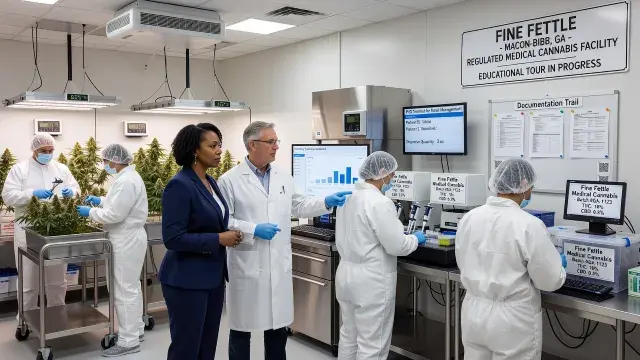
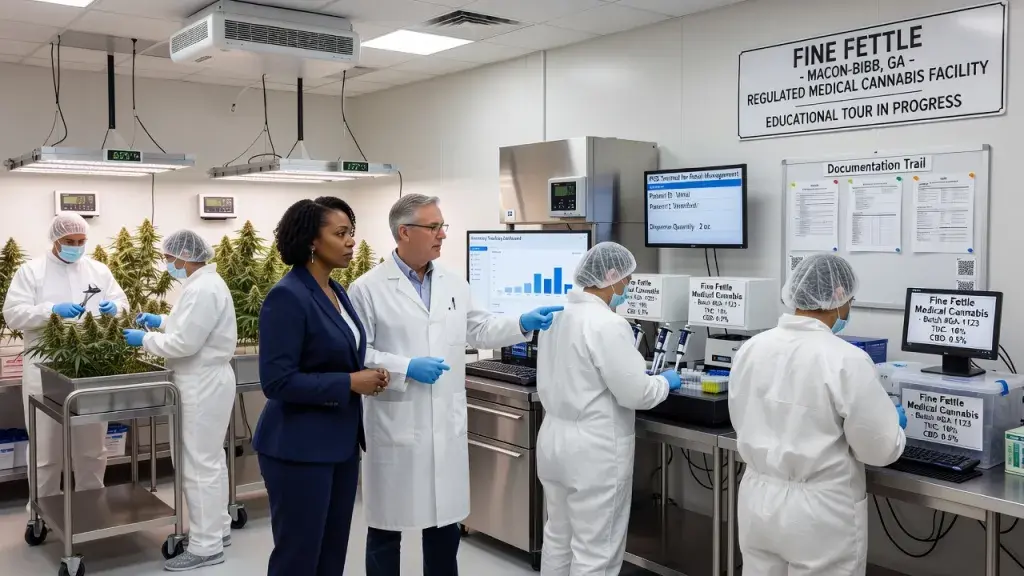
A decade after Georgia legalized medical cannabis, the program remains a fraction of what advocates envisioned, and the legislature's habit of letting expansion bills die in committee has become something of a running joke among operators. In Macon-Bibb, Fine Fettle decided to try a different approach this session: instead of lobbying from a distance, the company invited lawmakers, physicians, and patients directly into its cultivation and manufacturing facility to watch how a regulated product actually gets made.
That distinction matters more than it might sound. Georgia's medical cannabis market operates under a tightly licensed, seed-to-sale framework - only three companies currently hold licenses to grow, manufacture, and distribute product to dispensaries statewide, a structural bottleneck that shapes everything from wholesale pricing to product availability. Compare that to adult-use markets in other states, where dozens of cultivators and processors compete on a wholesale menu, and it's worth noting how different the operational reality looks for a limited-license medical state. The compliance infrastructure behind that reality - inventory tracking, lab testing, compliant packaging, and increasingly the retail technology layer, from POS terminals to systems like a cbd store point of sale system california operators use to manage regulated SKUs - is exactly what Fine Fettle wanted regulators to see up close.
Why the Legislature Keeps Stalling
Senate Bill 220 and House Bill 227 both aimed to loosen access - easing the path to a medical cannabis card and updating allowable product forms so patients could get more clinically appropriate options. Both stalled. That's not unusual for Georgia; expansion efforts have repeatedly hit the same wall, whether from lingering political caution around cannabis or simple legislative inertia. State Rep. Anissa Jones, who joined the facility tour, framed the visit as a corrective to misconceptions lawmakers may carry into these votes - that medical cannabis production is somehow informal or unregulated. In practice, though, it's closer to pharmaceutical manufacturing than backyard cultivation: batch testing, controlled environments, and documentation trails designed to produce a consistent product every time.
The Access Gap Physicians Are Flagging
Dr. Elmore Alexander's comments point to a narrower but real clinical problem. Georgia's current product formulary reportedly serves the majority of registered patients adequately, but a smaller population - his estimate put it at roughly one-fifth - needs product forms or formulations the state hasn't yet authorized. That gap sits squarely on lawmakers' desks, not operators'. Fine Fettle and its two counterpart licensees can only manufacture within the bounds the state permits; expanding the product form list requires statutory change, not just operational will.
What This Means for Operators and Patients
For a limited-license market, every stalled bill has compounding effects. License caps concentrate risk in three operators, so any regulatory rigidity limits patient choice, wholesale flexibility, and the kind of gradual market maturation seen in larger medical states. Facility tours like this one won't rewrite the statute overnight, but they build the kind of firsthand regulatory literacy - seeing the controls, the testing, the manufacturing discipline - that tends to move cautious legislators more than a hearing room presentation does.