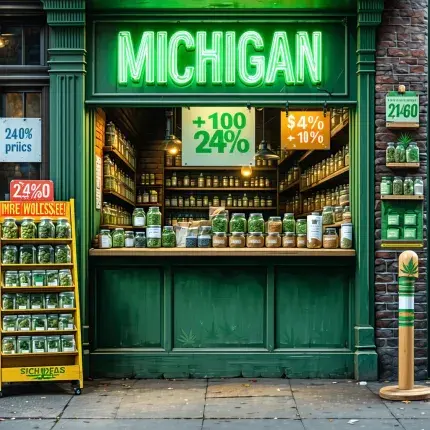

In Michigan's latest state budget, lawmakers have introduced a 24% wholesale tax on transactions between marijuana producers and dispensaries, layering it atop the existing 10% excise tax. This move, targeting the burgeoning cannabis industry, aims to generate revenue for road repairs but raises alarms about affordability and market consolidation in a sector still maturing post-2018 legalization.
Breaking Down the New Tax Structure
The 24% tax specifically applies to wholesale marijuana sales from growers to dispensaries across Upper Michigan and the state. Combined with the 10% excise tax paid at retail, this could drive significant price increases for consumers. For context, Michigan's recreational cannabis market has exploded since voters approved it in 2018, with licensed sales surpassing $3 billion in 2023 alone, according to state data.
- New 24% wholesale tax on producer-to-dispensary transactions
- Added to existing 10% retail excise tax
- Revenue earmarked exclusively for statewide road infrastructure
- Expected to raise costs: a $100 pre-tax item jumps from $116 to $140 post-tax
Industry Voices Highlight Growing Pains
Stakeholders like Fire Station Cannabis Company's Chief Marketing Officer Kelsey Potes acknowledge Michigan's crumbling roads need funding but question burdening a nascent industry. "It's disappointing that an industry still finding its footing is being asked to shoulder that cost," Potes stated. Similarly, Dealz Cannabis partner Maxwell Mraz in Crystal Falls predicts widespread price hikes and closures among smaller cultivators, potentially leading to market dominance by a few large players.
This echoes patterns in other legalized states like Colorado and California, where high taxes initially spurred black market persistence before consolidation stabilized prices.
Implications for Consumers, Businesses, and Public Policy
While road funding addresses a critical need—Michigan's infrastructure ranks among the nation's worst—the tax risks undermining cannabis accessibility, a key legalization promise. Smaller producers may fold, reducing product diversity and innovation in strains or wellness-focused products. Broader trends show taxed cannabis markets maturing toward sustainability, but over-taxation can stifle growth, push sales underground, and erode public health gains from regulated access over illicit sources.
Experts recommend lawmakers monitor impacts closely, perhaps phasing in the tax or offering rebates to small operators, to balance fiscal goals with industry health and consumer protection.