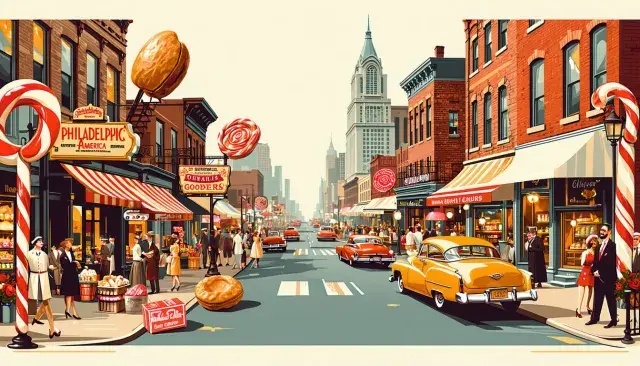
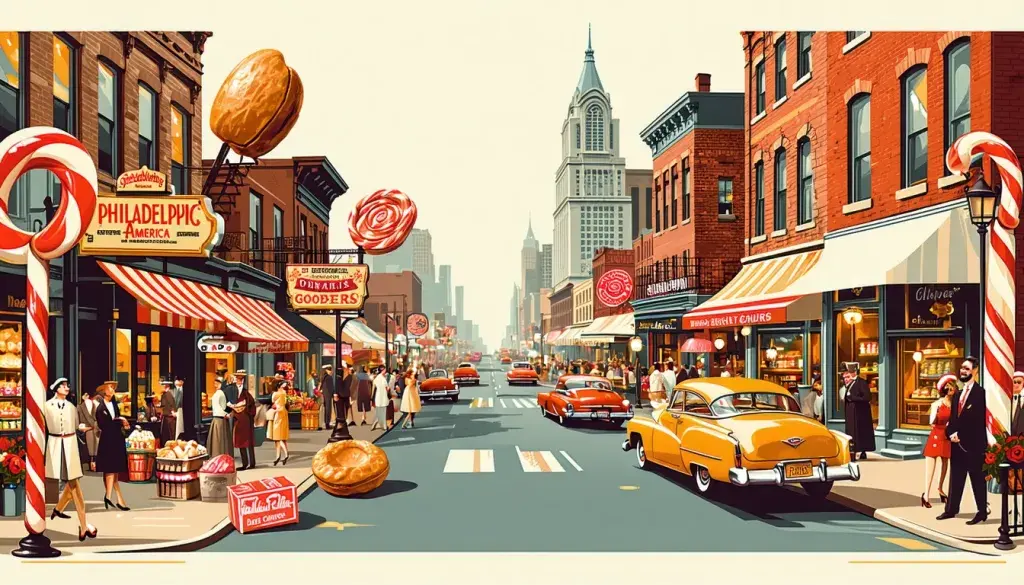
Long before the modern confectionery industry consolidated into a handful of multinational brands, Philadelphia was quietly becoming one of the most productive candy cities in the country. Goldenberg's Peanut Chews, Goobers, and Whitman's Sampler - names that still occupy grocery store shelves and holiday nostalgia alike - all trace their origins to the same mid-Atlantic city. According to Jared Bahir Browsh, writing for The Conversation, Philadelphia's role in American candy history runs deeper than most people realize.
Why Philadelphia? Geography, Industry, and Opportunity
The city's rise as a confectionery hub wasn't accidental. Philadelphia sat at a geographic crossroads - a major port city with access to sugar imports from the Caribbean and a dense urban population hungry for affordable indulgences. By the 19th century, its manufacturing infrastructure was already mature, and the candy trade fit naturally into that industrial fabric. Sugar refining, which requires significant capital investment and logistical reach, was already embedded in the regional economy. Candy makers didn't have to build supply chains from scratch; they inherited them.
There's also a cultural dimension worth taking seriously. Philadelphia had a large and economically diverse working class, the kind of population that historically drives demand for inexpensive, shelf-stable sweets. Penny candy, chocolate clusters, peanut confections - these weren't luxury goods. They were everyday pleasures, and Philadelphia's manufacturers understood that market intuitively.
The Candies Themselves: More History Than the Wrapper Suggests
Goldenberg's Peanut Chews have a particularly striking origin story. The chewy, molasses-based peanut candy was reportedly developed during World War I as a high-protein, energy-dense ration - functional before it was beloved. That it became a regional comfort food afterward says something about how wartime necessity has a habit of producing lasting civilian culture. The candy is dense, a little old-fashioned by contemporary standards, and completely itself. No apologies.
Whitman's Sampler, introduced in the early 20th century, did something commercially sophisticated for its era: it put a map on the box. The illustrated guide to what lay inside each chocolate was, in its own way, a proto-UX decision - reducing the anxiety of selection, giving the consumer a sense of control. It sounds tidy on paper, and in practice it worked for over a century. The Sampler became one of the most recognizable gift boxes in American retail, the kind of object that functions as much as social currency as confection.
Goobers - chocolate-covered peanuts marketed under the Nestlé umbrella for much of their modern life - were also Philadelphia-born, and became institutionally linked to movie theater culture in a way few snacks have managed. The association between Goobers and cinema wasn't just marketing; it reflected the snack's portability and the fact that eating them quietly in the dark was, practically speaking, viable. Small pleasures, well-placed.
What This History Tells Us About American Food Culture
The Philadelphia candy story fits into a broader pattern in American food history: regional manufacturing cities - Chicago with its meatpacking, San Francisco with its sourdough, New Orleans with its spice blends - often become cultural exporters precisely because they have the industrial density to scale a local taste into a national one. Philadelphia's candy makers did exactly that, turning neighborhood products into mass-market staples without losing the identifiable character that made them work in the first place.
What's striking here is how much of that original identity has held. Goldenberg's Peanut Chews still taste like Goldenberg's Peanut Chews. The Whitman's Sampler box still looks like the Whitman's Sampler box. In an era of constant brand refresh and flavor innovation, that durability is genuinely unusual - and probably not unrelated to the nostalgia economy that has made vintage candy a minor cultural obsession in recent years. People aren't just buying the chocolate; they're buying the continuity.
The deeper implication, perhaps, is that Philadelphia's confectionery legacy offers a useful lens on how American consumer culture actually forms: not through centralized planning, but through the accumulation of local decisions - a manufacturer who knew the port schedule, a chemist who figured out the right molasses ratio, a designer who thought to put a diagram on the lid - that compound over decades into something that feels, eventually, like tradition.