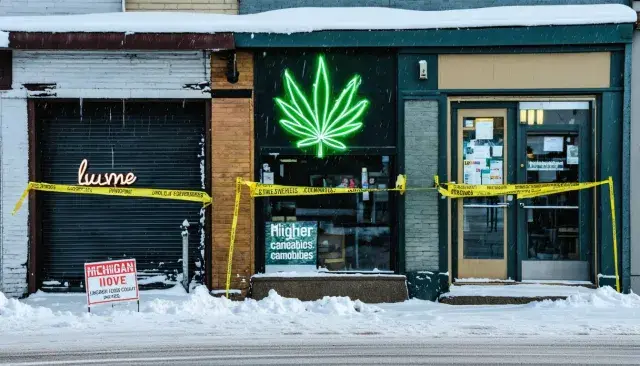

The chairman of the U.S. Senate Committee on Banking, Housing, and Urban Affairs has a problem he can't quite bring himself to solve. Senator Tim Scott (R-SC), speaking at the Milken Institute's Global Conference, acknowledged the real operational and public safety costs of locking state-legal cannabis businesses out of the federal banking system - while stopping well short of committing to move the legislation that would fix it. For dispensary operators, multi-state operators, and their financial and compliance partners, the word he used - "quandary" - about covers it.
Why Cash-Only Operations Remain a Serious Business Risk
Scott's most pointed observation wasn't about policy philosophy. It was about cash rooms. "What you don't want is to have a situation where you have these cash rooms where you have hundreds of thousands of dollars cash sitting in a location," he told the conference audience. That's not a hypothetical for licensed cannabis retailers. It's Tuesday.
Without access to standard commercial banking - business checking accounts, merchant processing, ACH transfers, commercial lines of credit - many dispensaries operate in a state of structured financial exposure. Large volumes of physical cash must be counted, stored, transported, and reconciled against point-of-sale records and seed-to-sale compliance logs, all without the institutional infrastructure that virtually every other licensed retail business takes for granted. The compliance burden alone is significant: cash handling protocols, armored transport costs, insurance premiums calibrated to the risk, and the staff hours consumed by manual reconciliation instead of automated settlement.
The security risk is real, and so are the downstream compliance implications. When cash volumes are high and banking is unavailable, the margin for error in financial recordkeeping widens - which creates exposure not just to theft, but to state regulatory scrutiny and potential license jeopardy. Regulators in adult-use and medical cannabis markets expect precise financial transparency from licensees. Running a cash-intensive operation makes that harder to demonstrate.
Rescheduling Didn't Solve the Banking Problem - and Scott Knows It
The Trump administration's move to federally reschedule marijuana generated considerable attention earlier in 2025. Scott addressed this directly, and his framing is worth sitting with: rescheduling, he said, does not resolve the core banking issue for financial institutions. That's accurate, and it matters for how operators and their advisors plan ahead.
Federal rescheduling - moving cannabis from Schedule I to Schedule III under the Controlled Substances Act - changes certain regulatory and research dynamics but does not grant cannabis businesses access to FDIC-insured banking or Federal Reserve payment rails. Financial institutions remain exposed to federal risk so long as cannabis is a controlled substance at the federal level and Congress has not explicitly protected banks that serve state-legal cannabis operators. Scott put it plainly: "Congress is going to have to make it legal." Until that happens, or until Congress passes specific safe harbor legislation, most federally chartered and insured banks will continue to decline cannabis business relationships rather than absorb the compliance and legal uncertainty.
The implications for dispensary finance teams and their legal counsel are direct. Rescheduling is not a banking solution. Operators who were anticipating expanded access to conventional credit products, payroll banking, or merchant services on the basis of rescheduling alone should recalibrate those expectations.
The SAFER Banking Act: Still Waiting, Still Relevant
The Secure and Fair Enforcement Regulation (SAFER) Banking Act is the legislative vehicle Scott pointed to. The bill's core mechanism is federal safe harbor protection for banks and credit unions that provide services to state-legal cannabis businesses - removing the threat of federal enforcement action that deters most institutional lenders and payment processors from entering the space.
Here's the catch: the SAFER Banking Act has passed the House multiple times in various forms, and has never received a Senate floor vote. As of early 2025, it has not been refiled in the 119th Congress. Scott, who now chairs the committee with jurisdiction over the bill, acknowledged bipartisan interest in addressing cannabis banking but was clear that he is not among the Republicans who have expressed strong support for the legislation. His 2023 votes and his consistent emphasis on "regular order" - rather than expedited action - suggest the bill faces a patient committee chair rather than an eager one.
Scott did express measured optimism: "I think we'll get to a solution." That's not nothing, coming from a committee chairman. But operators and compliance professionals should read that as a long-horizon statement, not a near-term legislative signal.
What This Means for Cannabis Operators Right Now
For licensed dispensaries and their business partners, the practical takeaway is this: federal banking reform remains uncertain, and operational decisions should reflect that reality rather than anticipate a resolution that hasn't materialized.
A few things worth tracking:
- State-chartered credit unions and cannabis-focused banking providers have stepped into the gap in many markets, offering basic depository services - but these relationships vary significantly by state, carry premium fees, and do not provide the full suite of commercial banking products most businesses need.
- Cashless payment workarounds - including PIN debit solutions and closed-loop payment platforms - remain widespread in cannabis retail, but their compliance status is contested and scrutinized at the federal level. Operators using these systems should maintain current legal counsel on their specific arrangements.
- The 280E tax provision, which disallows standard business expense deductions for cannabis businesses under federal law, is a separate but related financial constraint. Rescheduling to Schedule III could affect 280E applicability - but this remains a developing legal question, not a settled outcome.
- Multi-state operators and investors watching for banking reform as a catalyst for capital market access should maintain conservative financial modeling until Congressional action is concrete.
Scott's "quandary" framing is diplomatically honest. The banking gap creates genuine public safety risk - his cash room observation is correct - and it imposes serious operational and compliance costs on licensed businesses that followed every state rule to get their licenses. The absence of a federal fix isn't an oversight. It's a policy stalemate, and the cannabis industry is absorbing the cost of it every day.