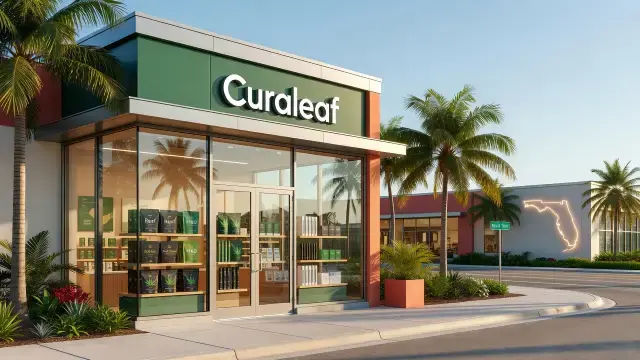
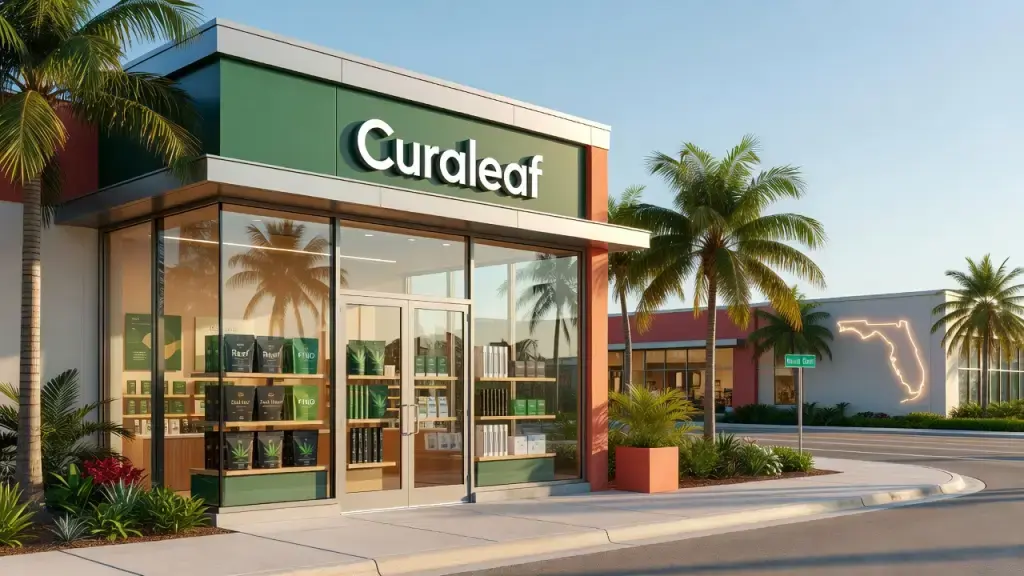
Curaleaf Holdings has opened another medical cannabis dispensary in Florida, this time in Port Orange, a Volusia County city just south of Daytona Beach. The Stamford, Connecticut-based multi-state operator announced the opening before market open, framing it as the latest build-out in what is already one of the largest retail networks it runs anywhere in the country. For a company listed on the TSX, each new store is a small but trackable data point in a much larger Florida strategy.
Why Location Still Decides Who Wins Florida Patients
Florida's medical cannabis program requires patients to be certified by a physician and registered with the state before they can buy anything. That gatekeeping shapes retail strategy in a way adult-use markets don't experience. Once a patient is registered, convenience becomes the deciding factor in where they shop, not impulse. The Port Orange store sits on Dunlawton Avenue, a corridor connecting the interstate running down Florida's east coast to Port Orange and nearby beach communities, giving it exposure to commuters, residents and seasonal visitors alike. In practice, though, proximity matters most for the demographic Volusia County actually has: a large retiree population and patients managing chronic conditions who value a nearby store with consistent inventory over a longer drive to a competitor. Store density, in other words, isn't just a growth metric. It's a retention tool.
Vertical Integration Makes the Brand Shelf the Whole Game
Florida requires licensed operators to cultivate, process and sell their own products under one roof. There's no wholesale market where a dispensary can pick up a rival's bestselling flower line to fill a gap. That structural detail is why Curaleaf's brand portfolio carries so much weight at each new store. The Port Orange location will stock Reef flower, which the company positions as Florida-exclusive, alongside its Dark Heart ultra-premium line, FIND flower, Anthem pre-rolls and the Select all-in-one vape, now featuring Select ACE oil. Spread across value and premium tiers, that lineup is designed to cover different patient budgets without needing outside suppliers. The catch is that vertical integration also means every new store adds pressure on the company's in-state cultivation and processing capacity. Keeping a freshly opened dispensary stocked from day one, without pulling inventory away from existing locations, is an operational balancing act that gets harder as the store count rises.
A Busy Month Signals a Broader Optimization Push
Port Orange follows a Wellington, Florida opening and a Pennsylvania relocation, both announced earlier in October. Grand opening events are planned for the final two days of the month, with promotions expected to stay within the bounds of Florida's advertising rules for medical marijuana treatment centers, alongside educational sessions aimed at newly registered patients. None of this is incidental. It points to a multi-state operator adjusting its retail map heading into year-end, closing geographic gaps in strong markets while repositioning weaker locations elsewhere. For a company chairman and CEO like Boris Jordan, who framed the opening around getting "closer to more patients," the logic is straightforward: in a state stretching from the Panhandle to the Keys, physical reach determines how many patients choose a storefront over delivery. For landlords, wholesalers and competing operators watching Florida's medical market, each announcement like this one is a small signal of where competitive pressure is building next.